The importance of using multiple measures for gMG patients1

Using aCombination of physician-evaluated tools
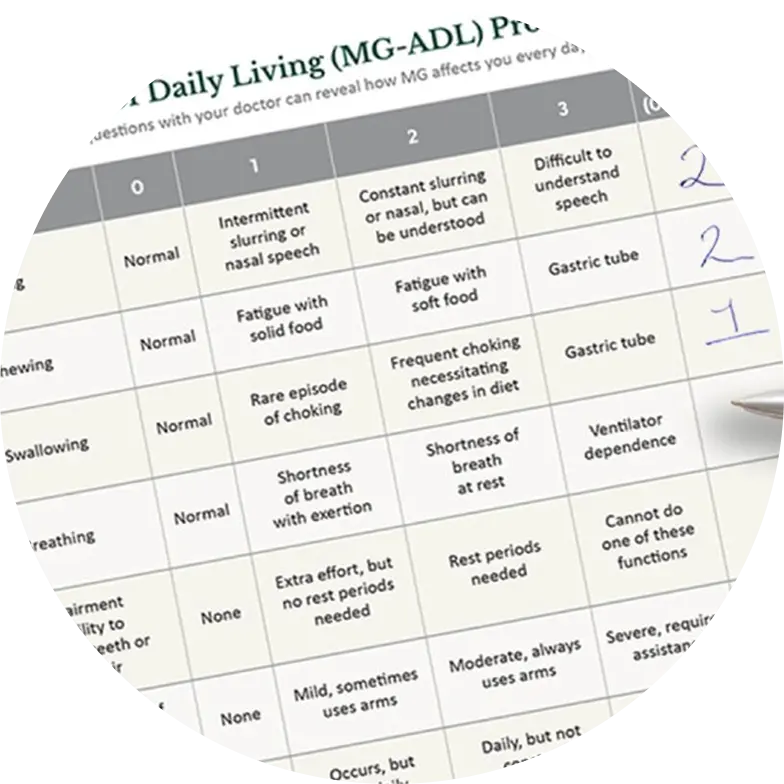
such as the QMG and patient-reported outcome as the MG-ADL
Or use Composite measures
Such as the MGC may provide amore comprehensive picture of patient's disease status
MGFA-PIS2a
can be used to assess clinically whether patients with MG achieve minimal manifestations, “ pharmacologic remission ” or worsening following treatment.
aMinimal manifestations is defined as the patient having no symptoms or functional limitations from MG but some weakness on examination of some muscles; this acknowledges that some patients, who otherwise meet the definition of remission, have mild weakness.2,3
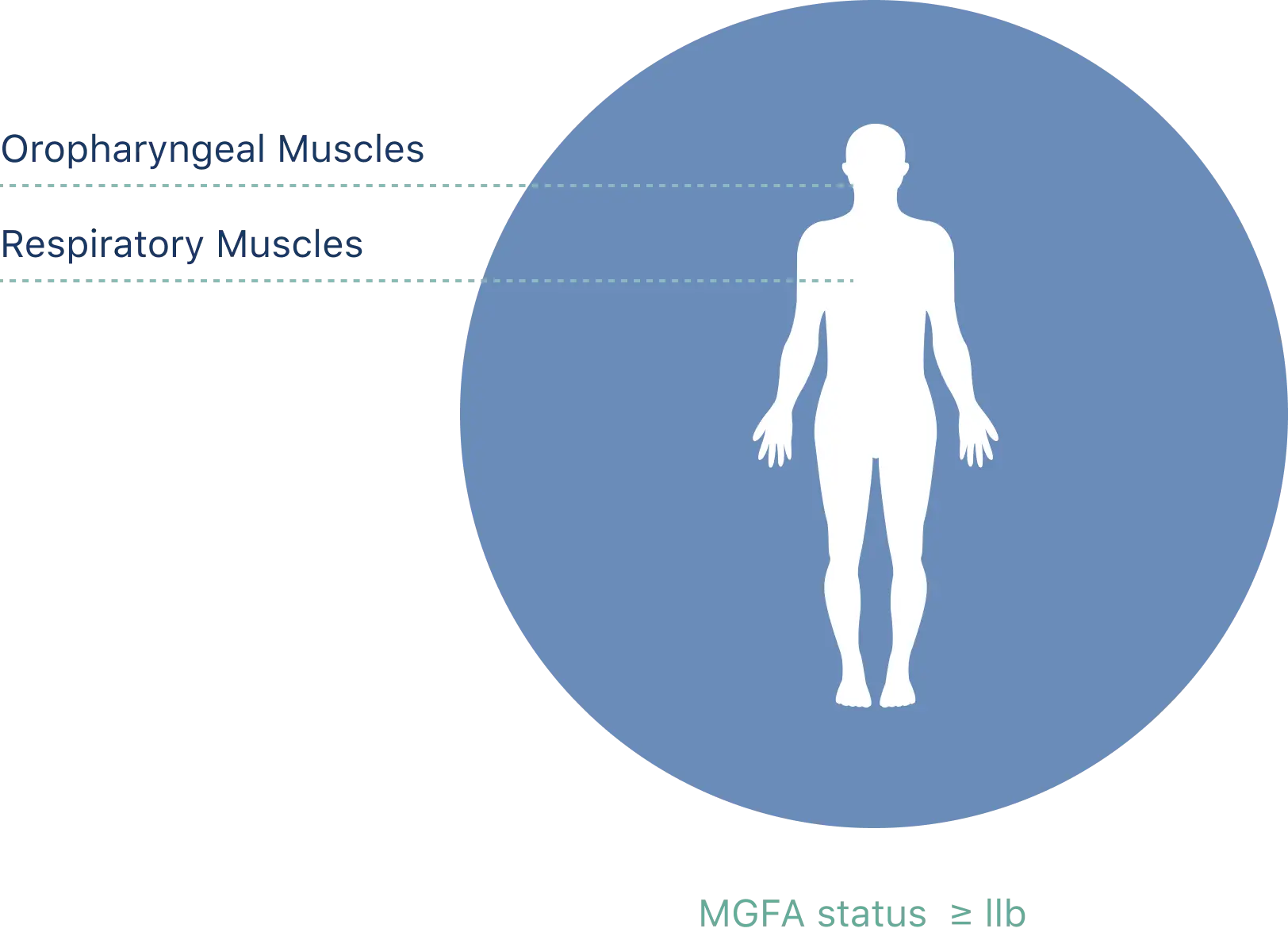
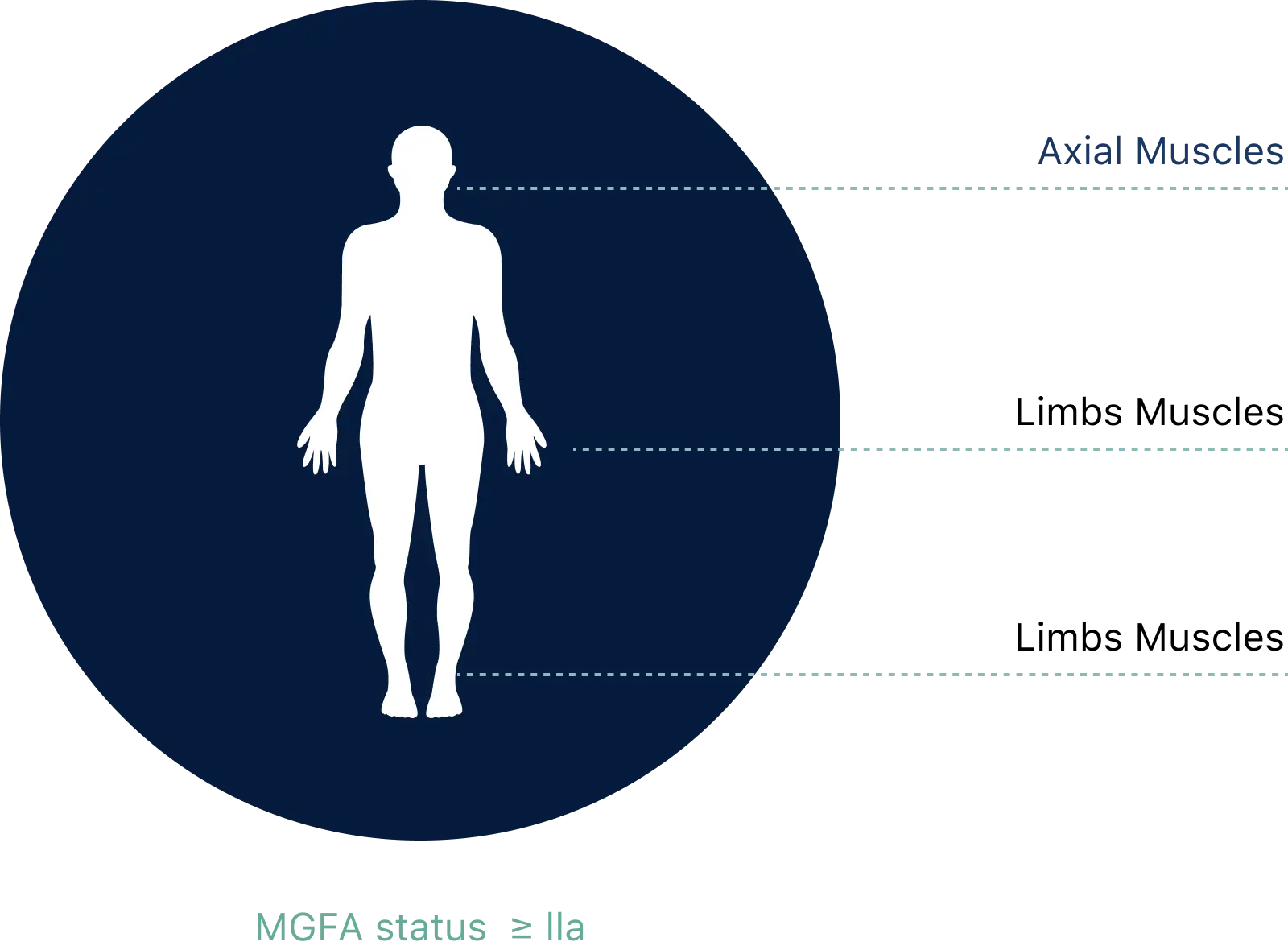
According to MGFA clinical classification, there are 5 main classes for MG3
Definition of highly active patients3
HIGHLY ACTIVE MG PATIENTS DESPITE ADEQUATE COURSE-MODIFYING AND SYMPTOMATIC THERAPY IS DEFINED AS ONE OF THE FOLLOWING
gMG, generalized myasthenia gravis; MG, myasthenia gravis; MG-ADL, Myasthenia Gravis Activities of Daily Living scale, MGC, Myasthenia Gravis Composite scale; MGFA, Myasthenia Gravis Foundation of America; PIS, post-intervention status; QMG, Quantitative Myasthenia Gravis scale.
References:
- 1. Howard JF, et al. Muscle Nerve. 2017; 56: 328-30.
- 2. Sanders DB, et al. Neurology. 2016; 87: 419-25.
- 3. Jaretzki A, et al. Ann Thorac Surg. 2000; 70: 327-34.